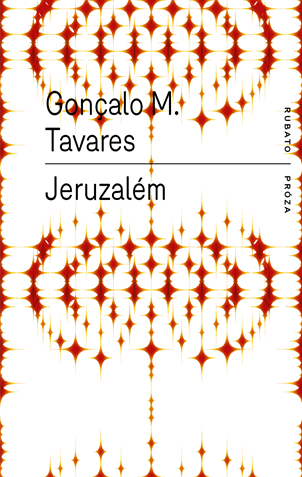
The novel Jerusalem is part of the Kingdom cycle, which the author describes as “black books” – works of prose intended to bury illusions. In a nonlinear narrative featuring a skillfully interwoven mosaic of characters, the author circles around two fundamental themes – pain and memory. Here, pain takes on both destructive and empowering forms, while memory and forgetting offer the possibility of salvation but also the threat of a repetition of past horrors. The main character, Mylia, a patient in a psychiatric hospital, embodies the thesis that one cannot forget – even painful memories serve as a warning against the return of human cruelty. The novel’s dark atmosphere, permeated by references to the Holocaust and dictatorial regimes, underscores its relevance today.
Gonçalo M. Tavares (* 1970) is often described as the most prominent contemporary Portuguese novelist. His books have been translated into more than thirty languages. His works published in Czech include Mr. Valéry (2011), Mr. Kraus and Politics (2011), and Mr. Brecht and Success (2011). His body of work alternates between the lighter, satirical texts of the Quarter collection and the darker prose of the Kingdom cycle. The novel Jerusalem is one of his masterpieces and has been included among the 1,001 Books You Must Read Before You Die.